News
News
13th Leipzig Veterinary Congress impresses with diversity and record numbers
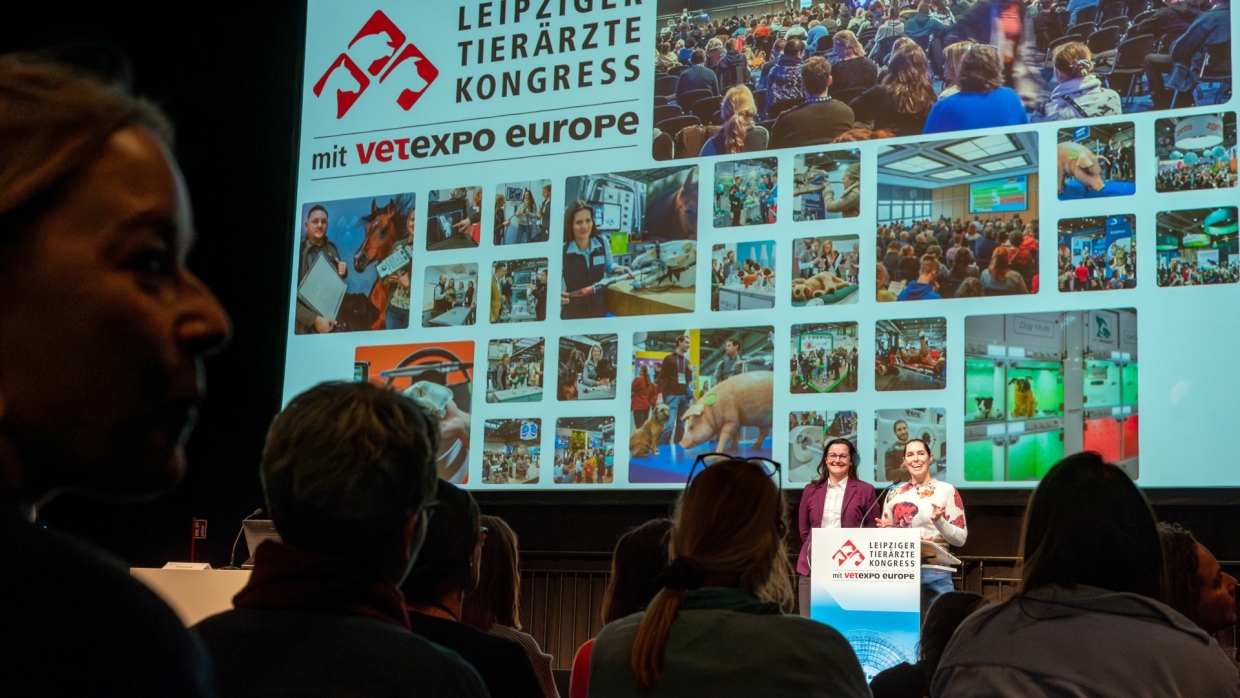
Continuing education, personal exchange and a new record: 13th Leipzig Veterinary Congress attracted 7,400 veterinary professionals, veterinary nurses and students. A total of 580 speakers shared the latest insights from science, research and clinical practice. At the same time, 352 exhibitors from 20 countries showcased their products, services and technologies for everyday veterinary work at the sold-out vetexpo europe.
“The past three days have clearly demonstrated how innovative, dynamic and multifaceted veterinary medicine truly is. The high level of participation, the quality of contributions and the intensity of discussions once again made the Leipzig Veterinary Congress a hub for knowledge exchange and forward-thinking dialogue. My special thanks go to all speakers and session chairs, whose expertise and dedication played a key role in shaping and supporting this congress,” summarised Professor Dr Uwe Truyen, Congress President and Director of the Institute of Animal Hygiene and Public Veterinary Services at Leipzig University.
A Knowledge Forum of Diversity
A total of 580 national and international speakers contributed their expertise through lectures, courses, panel discussions and interactive formats. Over three days, the congress covered a wide range of topics – from specialised subjects such as dental health and nutrition in sport horses, epilepsy in dogs and cats, and rearing issues in parrot breeding, to broader societal topics like violence prevention in veterinary practices and current animal welfare legislation in Germany and the EU.
Looking ahead: International Perspectives on Veterinary Education
For the first time, the European Conference on Veterinary and Medical Education was held in Leipzig. Experts from nine countries, including Brazil, the UK, Ireland, Israel, Italy, Slovenia and Hungary, explored current challenges in veterinary education. Discussions focused on international comparisons of training models, the use of artificial intelligence in teaching and learning, and the extent to which animal use in education is still necessary. The goal was to discuss new didactic approaches, further develop proven concepts and strengthen international cooperation – particularly in terms of networking veterinary education across Europe.
A Popular Meeting Point with Broad Reach
Packed lecture halls, strong interest and overwhelmingly positive feedback characterised this year’s congress. This enthusiasm is confirmed by the participant survey: 93 per cent would recommend the event. Attendees travelled from all over Germany – and more than ever before from abroad. Visitors came from 40 countries in total, with particularly strong representation from Switzerland and Austria.
A Dynamic Industry Showcase
vetexpo europe proved to be vibrant and energetic across all three days: bustling stands, countless product demonstrations and an intense exchange among attendees. Many exhibitors presented the latest innovations for veterinary practice – from surgical and clinic equipment to digital applications.
Artificial intelligence and virtual reality technologies were particularly prominent, illustrating how these tools are gaining ground in veterinary medicine. Among the highlights were AI phone assistants and intelligent practice management systems, offering a glimpse into the industry's technological future.
“Leipzig Veterinary Congress exceeded our expectations. It’s the central forum of our profession – a place where the passion for animal health becomes tangible. This year it became clear: animal health depends on a strong ecosystem – supported by the veterinary community, science, politics and industry. Only together can we shape the challenges ahead,” emphasised Sandra Quintero, Managing Director of Boehringer Ingelheim Vetmedica GmbH.
Technology Made Tangible
The special exhibition in Hall 2 made it clear how veterinary and agricultural technologies can work hand in hand. A particular eye-catcher was the mobile large animal clinic truck from Leipzig University’s Faculty of Veterinary Medicine. Numerous visitors explored the equipment and potential uses of the vehicle, which included telemedicine technology capable of transmitting real-time data via VR headset directly to the clinic.
Leipzig University also presented its “Mobile Barn”, an innovative showroom for smart technologies in agriculture and livestock farming. Visitors could try out a prototype VR headset that displays animals’ health data directly in the barn. Complementing the exhibit were autonomous drones: a spraying and seeding drone for viticulture, and a thermal drone for detecting heat signatures to help locate grazing animals or identify weed growth.
Save the Date
14th Leipzig Veterinary Congress will take place from 20 to 22 January 2028, once again alongside PARTNER PFERD at Leipziger Messe.
The next major veterinary event in the German-speaking world will be VetMed – Tiermedizintage Baden-Württemberg , held in Stuttgart on 5 and 6 February 2027.